
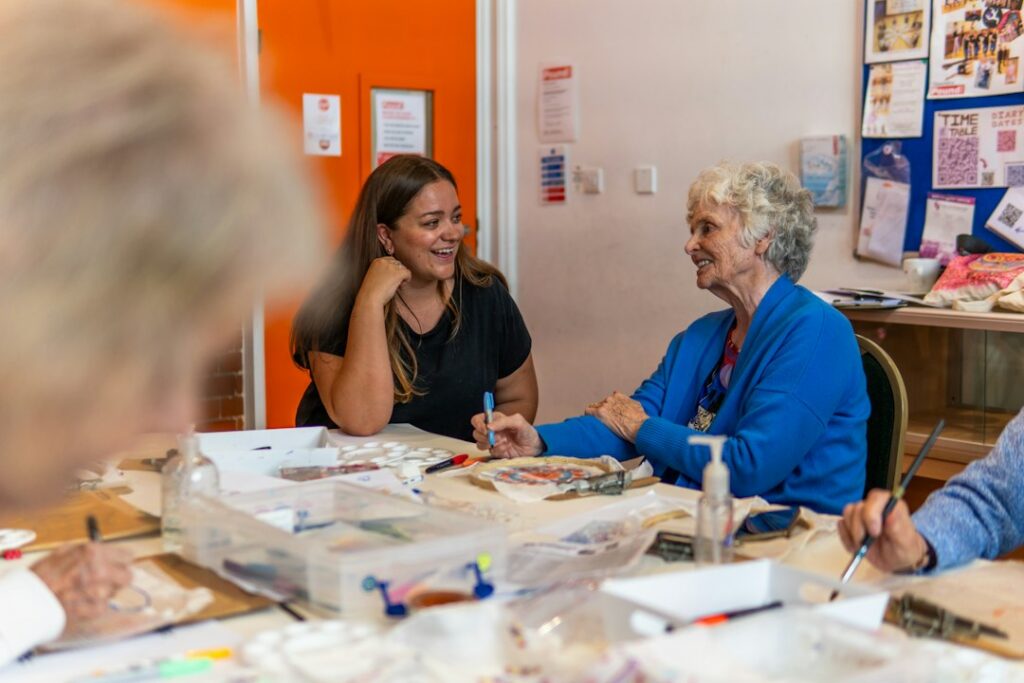
What does creativity look like in assisted living?
Creativity in assisted living is not limited to painting or musical performance. It includes any activity that allows an older adult to make choices, express memories, solve problems, use imagination, or create something meaningful.
For residents in New Holland, PA, creative engagement may include quilting, gardening, storytelling, woodworking, baking, photography, singing, arranging flowers, writing letters, decorating a room, or helping prepare a seasonal display. The activity matters less than the opportunity to participate in a personally satisfying way.
Creative programs can also support daily well-being. They may give residents a reason to look forward to the day, encourage conversation, and provide a sense of accomplishment that does not depend on physical strength or memory ability.
Why is creativity valuable for older adults?
Creative activities support several areas of aging at the same time. They can offer mental stimulation, emotional expression, social connection, and a sense of purpose.
A resident who paints a familiar farm scene, for example, may be exercising visual attention while also recalling places, people, and routines from earlier life. Someone who sings may benefit from rhythm, breathing, memory, and group participation. A person who sorts fabric squares for a quilt may be using hand coordination and making a contribution to a shared project.
Creativity may help residents:
- Maintain a sense of identity beyond a diagnosis or care need
- Express feelings that are difficult to describe directly
- Practice hand coordination and attention
- Reconnect with familiar memories and traditions
- Build friendships through shared interests
- Make personal choices in an organized setting
- Create gifts, decorations, or keepsakes for family members
These benefits do not require artistic talent. A creative activity should not be judged by how polished the final product looks.
How can assisted living activities be adapted for different abilities?
The most inclusive activities offer more than one way to participate. A resident may be able to lead a discussion, choose colors, dictate a story, arrange materials, or observe the process even if they cannot complete every physical step.
For residents with arthritis, tremors, limited vision, or reduced strength, useful adaptations may include:
- Larger-handled brushes, pencils, or cooking utensils
- Lightweight materials that are easier to lift
- Pre-cut paper, fabric, or craft pieces
- Non-slip mats and stable work surfaces
- High-contrast colors for better visibility
- Shorter activity periods with rest breaks
- Verbal directions given one step at a time
- Sample projects that demonstrate the process without requiring imitation
Residents living with dementia may benefit from familiar, repetitive, and sensory activities. Sorting buttons by color, folding fabric, listening to well-known songs, arranging artificial flowers, or looking through family photographs can all be meaningful.
The goal is participation, not perfection. Correcting a resident repeatedly or taking over the task can reduce confidence and enjoyment.
Which creative activities work well in an assisted living setting?
A strong activity program includes both structured projects and informal opportunities. Structured programs provide guidance, while informal activities allow residents to create at their own pace.
Visual arts
Drawing, watercolor, collage, clay, and seasonal crafts can be adjusted for many ability levels. Projects based on local landscapes, barns, gardens, harvest colors, or family traditions may feel especially familiar to residents who have spent much of their lives in agricultural or small-community settings.
Music and movement
Singing groups, listening sessions, rhythm instruments, and gentle movement with music can encourage participation even when residents do not consider themselves musicians. Familiar songs often prompt conversation and memories.
Music should not be treated only as entertainment. It can also be a way for residents to make choices, lead a song, share a cultural tradition, or introduce others to music from their earlier years.
Storytelling and writing
Residents may enjoy recording family recipes, describing their first job, writing short poems, creating a life-history booklet, or telling stories about seasonal work and community celebrations. Staff or family members can write down a resident’s words when writing independently is difficult.
Gardening and nature-based projects
Container gardening, seed-starting, flower arranging, herb planting, and nature sketching can bring seasonal changes indoors. During cold, wet, or very hot weather, indoor gardening tables and window-based projects can provide a similar connection to the outdoors.
Raised containers, lightweight watering tools, and seated work areas can make gardening more accessible.
Cooking and familiar household skills
Measuring ingredients, decorating cookies, kneading dough, preparing a family recipe, or setting a table can bring back familiar routines. Activities involving heat, sharp tools, or food allergies require appropriate supervision and clear safety procedures.
How can families encourage creativity during visits?

Families can support creative engagement by bringing conversation and materials that reflect the resident’s history. A small selection is usually more helpful than a large box of unfamiliar supplies.
Useful ideas include:
- Looking through labeled family photographs
- Asking a resident to describe a favorite recipe
- Listening to music from an important period of life
- Bringing postcards, fabric samples, gardening catalogs, or nature pictures
- Completing a simple puzzle or collage together
- Recording stories about holidays, work, school, or family traditions
- Displaying the resident’s artwork where it can be seen and discussed
Questions should invite memories without testing them. “What do you remember about making this?” is usually more comfortable than “Do you remember who gave you this?”
A family visit does not need to produce a finished project. The conversation, attention, and shared experience may be the most valuable part.
What should residents ask about a creative activity program?
Residents and families may want to ask how activities are selected and whether participation is flexible. A meaningful program should include different levels of ability, interests, and cultural backgrounds.
Helpful questions include:
- Are activities available for residents who prefer individual projects?
- Can residents suggest or lead activities?
- Are supplies provided in accessible formats?
- Are outdoor activities adjusted for heat, cold, rain, and uneven surfaces?
- How are residents with memory loss included?
- Are family members invited to contribute skills or stories?
- Are finished projects displayed or shared only with the resident’s permission?
- Can residents participate as helpers, observers, storytellers, or decision-makers?
Privacy and consent matter. A resident should not be photographed with artwork or have personal writing shared publicly without clear permission.
How can creativity remain part of everyday life?
Creative living is more sustainable when it is woven into ordinary routines rather than limited to special events. A resident might choose the table centerpiece, select music for lunch, help organize a bookshelf by color, fold napkins for a gathering, or decide which photographs to display.
Staff and families can look for moments of choice throughout the day. Offering two reasonable options—such as blue or green paper, music or conversation, indoor or outdoor seating—can support independence without creating confusion.
In New Holland, seasonal rhythms may provide natural themes for creative activities, from spring planting and summer gardens to autumn harvest colors and winter indoor projects. These familiar subjects can help residents connect present-day activities with long-standing interests and memories.
The most effective approach is respectful and individualized: learn what a person has enjoyed, adapt the activity to current abilities, and allow the resident’s preferences to guide the experience.
